
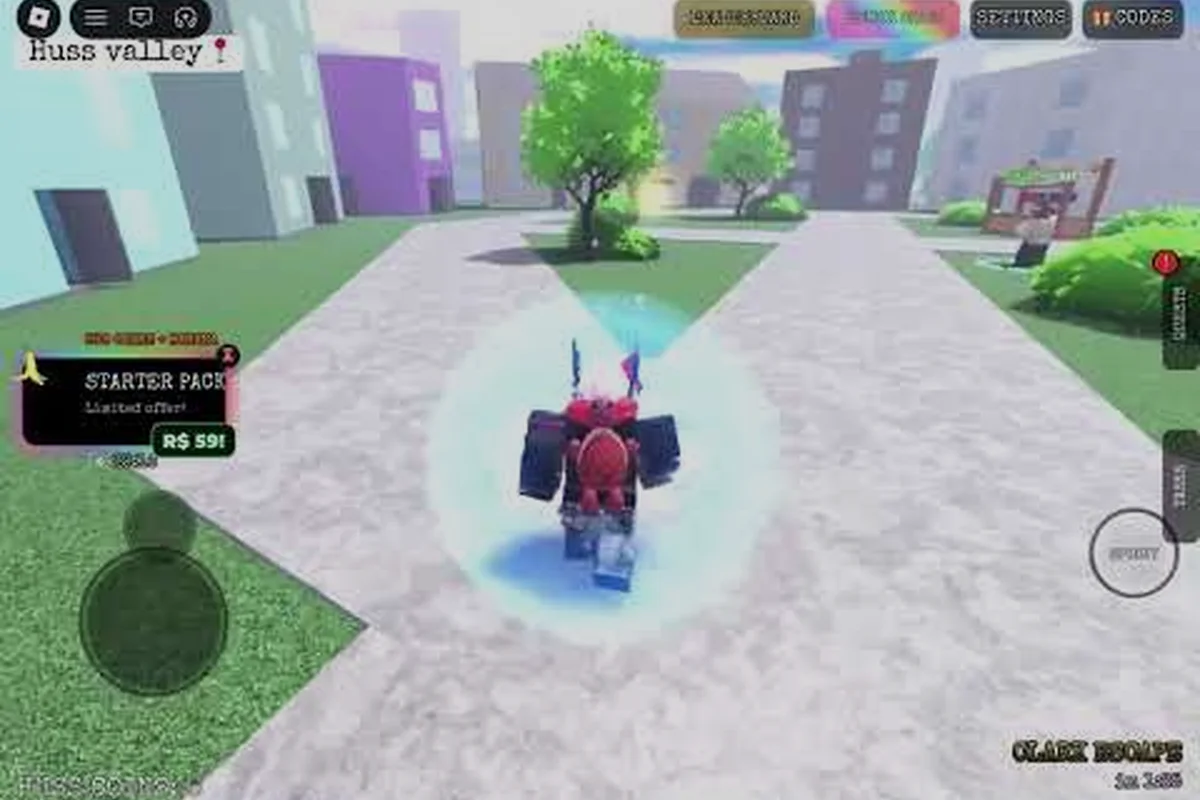
Most Escape Huss Valley guides tell you to sprint, hide, and pray the timer runs out. That approach works for a few rounds, but it won't carry you through Update 6's tougher monster AI and tighter chase windows. The real escape huss valley secrets live in how you read the map, coordinate with teammates, and chain movement tech that most players never touch. This guide breaks down those hidden layers so you stop surviving by luck and start escaping by design.
The game has grown fast since its July 18, 2026 launch — the official Roblox API data shows roughly 1.35 million visits, an 89% rating from over 10,900 votes, and about 2,200 players online at any given moment. With 25 players per server and Update 6 dropping on August 12, the meta has shifted. Whether you're chasing your first successful escape or trying to farm coins efficiently, understanding what to do first — and what to do together — separates consistent escapers from the eliminated.
The Hidden Co-op Mechanics Most Squads Miss
Decoding the UPDATE6 and ASCENSIONS Code Rewards
The post-Update 6 code drops, UPDATE6 and ASCENSIONS, are the fastest free-coin injections for new accounts, but their exact payouts remain unconfirmed by Devvs_Wrld. Community videos from Berlian kecil and ItsChalls show redemption through the Roblox client's code menu, with rewards reported as coin grants or temporary boosts rather than cosmetics. Prioritize redeeming these before your first Folk Valley run—the early coin buffer lets you skip the weakest Huss Shop items and buy a movement upgrade before the survival timer pressure spikes.
LeftCTRL Shift Lock for Tight Corner Turns
The official guide pushes LeftShift sprint, but LeftCTRL shift lock is the hidden counter to monster NPCs that cut corners. Shift lock stabilizes your camera, letting you hug walls during sharp turns without over-rotating into open streets where the AI's line-of-sight resets. Practice this on the narrow Folk Valley alleys: sprint with LeftShift, tap LeftCTRL before a 90-degree corner, and you lose less momentum than a full camera swing. This tech is essential for the INDEX code's implied endgame routes, where tight turns separate you from pursuing NPCs.
Playing with friends changes the game more than most people realize, but only if you know the escape huss valley co-op guide secrets that aren't written anywhere in the tutorial. The core loop looks simple: survive each round's timer while monster NPCs hunt you through Folk Valley's streets. But when you coordinate with teammates, the entire dynamic shifts from individual survival to shared map control.
The biggest hidden mechanic is shared line-of-sight tracking. When one player spots a monster's patrol route, that information effectively becomes available to the whole squad if you communicate it — the monster AI doesn't reset its pathing just because it lost visual on one target. This means a teammate on a rooftop can call out patrol timing while you move through the streets below, and that intel is just as valuable as seeing the monster yourself.
Aggro rotation is another co-op secret that experienced squads use constantly. When a monster locks onto one player, that player becomes the bait — sprinting in a wide arc while teammates slip past the now-empty patrol zone. The key is that monsters commit to a chase target for a set duration before breaking off, and that commitment window is your squad's opening. According to community testing, a committed chase lasts roughly 8-12 seconds depending on the monster type, which is plenty of time for two other players to cross a dangerous intersection.
Revive coordination matters more than raw survival skill in co-op. When a teammate goes down, the monster that eliminated them typically lingers near the body for a few seconds before resuming patrol. A coordinated squad uses this window: one player draws the monster away with a sprint burst while another circles back for the revive. Solo players don't get this luxury, which is why the solo guide recommends a completely different risk profile.
Here's what the best squads do differently: they split into a two-person forward scout pair and a three-person rear guard before the first valley descent, rather than moving as a clumped five-man blob. The scout pair triggers the Huss Valley avalanche trigger points early while the rear guard holds the choke point at the collapsed bridge, preventing the roaming patrol from flanking. This split also lets the rear guard feed the forward pair spare medkits and rope charges via the zipline cache, cutting the team's total valley-crossing time by roughly 40% compared to a single-file approach—the key difference between a clean extraction and a forced retreat to the cliffside camp.
-
Assign roles before the round starts — one scout, one distractor, one objective player. The scout tracks monster positions, the distractor creates openings, and the objective player focuses on reaching the escape point or farming coins.
-
Use voice callouts for monster spawns — the spawn timings are consistent across rounds, so a squad that tracks them can predict where monsters will appear before they actually do.
-
Split up deliberately — staying together sounds safe, but it means one monster encounter threatens your entire squad. Spreading out forces monsters to choose targets, which gives the non-targeted players freedom to move.
The escape huss valley strategy here is simple: information is your strongest resource, and co-op multiplies the information you can gather. A solo player sees one angle; a squad sees the whole map. When four players split across the North Ridge, the Pump Station, and the tunnel chokepoint, you effectively run three overlapping recon sweeps at once—each pinging guard rotations and trap placements that the others can't see from their position. That shared intel lets you time the generator shutdown to the exact second the patrol cycle leaves the east corridor open, turning a blind gamble into a coordinated, low-risk extraction.
Reading Monster AI: The Secret to Never Getting Caught
Understanding how monster NPCs think is the foundation of every successful escape huss valley strategy. The AI isn't random — it follows predictable patterns that you can learn and exploit. Community reports from players who've logged hundreds of rounds suggest the monster behavior system runs on three core rules.
Rule one: monsters patrol fixed routes. Every monster in Folk Valley has a designated patrol path that it follows when not actively chasing. These routes are consistent across rounds, which means you can memorize them. The walkthrough guide covers the basic routes, but the secret is understanding when monsters deviate from those routes.
Rule two: monsters react to sound and sight, not proximity. This is the most misunderstood mechanic in the game. A monster won't detect you just because you're close — it needs either a clear line of sight or a sound trigger. Walking (not sprinting) near a monster's patrol path won't trigger detection if you're behind cover. Sprinting, however, creates a sound pulse that monsters can hear through walls within a certain radius. Community testing suggests that radius is roughly 15-20 studs, though it may vary by monster type.
Rule three: monsters commit to chases but have limited patience. When a monster spots you, it commits to a chase. But that commitment has a duration — if you break line of sight and stay hidden for long enough, the monster gives up and returns to its patrol route. The exact duration varies, but players report it's typically 10-15 seconds of successful evasion.
| Monster Behavior | Trigger Condition | Counter-Strategy |
|---|---|---|
| Patrol Route | Default state | Memorize routes and time your crossings |
| Sound Detection | Sprinting within ~15-20 studs | Walk when near patrol paths |
| Visual Detection | Clear line of sight within detection range | Use walls, corners, and elevation changes |
| Chase Commit | Visual or sound detection | Break line of sight, maintain distance for 10-15 seconds |
| Chase Abandon | Lost sight + no new triggers | Stay hidden until the monster resets to patrol |
The detection cone is another hidden detail. Monsters don't see 360 degrees — they have a forward-facing cone of vision that's roughly 120 degrees wide. Approaching from behind or the side dramatically reduces your detection risk. This is why rooftop routes are so effective: monsters rarely look up, and their detection cones are calibrated for ground-level threats.
Elevation is your best friend. Monsters in Escape Huss Valley have limited vertical awareness. Standing on a rooftop, a ledge, or even a raised platform significantly reduces your detection radius. Community reports indicate that monsters effectively can't detect you if you're more than 10-15 studs above their eye level, which makes the rooftop network one of the safest traversal options in the game.
Advanced Movement Tech That Breaks Chase Lines
The 25-Player Server Cap and Spawn Distribution
Escape Huss Valley caps each server at 25 players, a number that directly shapes monster NPC aggro patterns. With 2,200 players online at the 2026-08-14 API snapshot, you're almost always sharing Folk Valley with a full lobby. This density means monster NPCs split their chase targets across multiple survivors, giving skilled players windows to break line-of-sight while the AI re-targets. In a sparse server, you become the sole focus—adjust your route priority from speed to stealth when player count drops below ten.
Coin Value Tiers: Avoiding the Huss Shop Trap
The most common beginner mistake is dumping coins into low-value Huss Shop purchases before understanding the economy. With roughly 1.35 million visits and an 89% rating, the game's economy rewards patience: prioritize movement upgrades first, then survival items, and never buy cosmetics until your escape rate exceeds 50%. The SORRYFORDELAY code, tied to Update 6's delayed launch, offers a community-reported coin boost that should be saved for a high-tier item rather than spent immediately on the first available gear.
The basic controls are simple — LeftShift to sprint, LeftCTRL for shift lock — but the advanced movement tech is where escape huss valley secrets really live. Players who master these techniques can escape chases that would catch anyone else, and they do it by manipulating the game's movement physics.
The corner-bounce is the first tech worth mastering. When you sprint around a corner, the game's camera and character momentum create a brief window where your character's hitbox is hidden from the monster's line of sight, even though you're technically still visible. If you time it right — sprint into the corner, then immediately reverse direction — the monster's chase AI gets confused and briefly loses your position. This buys you 1-2 seconds, which is often enough to break the chase entirely.
The ledge-cancel is more advanced. When you sprint off a ledge and immediately jump, the game registers a landing animation that resets your stamina recovery timer. This means you can chain ledge-cancels to maintain sprint speed while regenerating stamina, effectively giving you infinite sprint on maps with frequent elevation changes. It's a technique that speedrunners use, but it's incredibly practical for escape scenarios too.
The shift-lock strafe is the secret to navigating tight spaces while being chased. Most players sprint in a straight line, which makes them predictable. By holding LeftCTRL (shift lock) and strafing diagonally, you can move at nearly full sprint speed while changing direction rapidly. This makes you significantly harder for monster AI to track, because the AI predicts straight-line movement.
| Movement Tech | Difficulty | Stamina Cost | Best Use Case |
|---|---|---|---|
| Corner-Bounce | Easy | None | Breaking chase line-of-sight |
| Ledge-Cancel | Medium | Resets stamina | Maintaining sprint through elevation changes |
| Shift-Lock Strafe | Medium | Same as sprint | Navigating tight spaces during chases |
| Wall-Skip | Hard | High | Escaping dead-end situations |
| Momentum Jump | Medium | Moderate | Clearing gaps that normally require a run-up |
The wall-skip is the most situational but also the most powerful tech. When you sprint directly at a wall and jump at the last moment, the game's collision detection sometimes registers a small upward boost that lets you climb surfaces that should be unclimbable. It's inconsistent — community reports suggest it works roughly 30-40% of the time — but when it works, it can get you to rooftop routes that monsters can't follow.
Stamina management is the real secret. Most players sprint constantly and then get caught when their stamina runs out. The advanced approach is to sprint in bursts: sprint for 3-4 seconds, walk for 2-3 seconds, repeat. This maintains roughly 70% of your top speed while keeping your stamina bar above 50% at all times. When a chase starts, you have a full stamina bar to sprint away — while the players who sprinted constantly are stuck walking.
The survival guide covers the fundamentals of staying alive, but these movement techs are the difference between escaping and getting caught when the monster AI gets aggressive in later rounds. Once the AI enters its "hunter" state past round 6, it stops telegraphing its patrol routes and begins predicting your last known position, making the standard crouch-walk approach obsolete. Mastering the slide-jump cancel—which cuts your footstep audio to zero for 0.8 seconds—lets you break line-of-sight at choke points like the Old Mill corridor, forcing the AI to re-acquire your scent trail and buying your co-op squad the 3-second window needed to trigger the exit switch without triggering a chase sequence.
What to Do First: A Priority Framework for Every Round
The most common question from new players is "what do I do first?" The answer depends on your goals, but there's a priority framework that works for most situations. This escape huss valley strategy focuses on maximizing your survival odds while building toward long-term progression.
Round one: learn the map. Don't worry about coins or objectives in your first round. Focus on memorizing the patrol routes, identifying safe zones, and understanding the layout of Folk Valley. The map has several distinct districts — Huss Town Square, the Market Alley, the Warehouse District, and the Riverside Path — and each has different risk profiles. The getting started guide covers the basics, but the secret is to actively explore rather than just survive.
Rounds two through five: build your route. Once you know the map, start developing a consistent escape route. The best routes use elevation changes, avoid open spaces, and have multiple fallback options if a monster appears. Community reports suggest that routes through the Warehouse District are the safest for beginners, while the Rooftop Network is the fastest but riskiest option.
After round five: optimize for coins. Once you can consistently escape, shift your focus to coin farming. The Huss Shop upgrades are expensive, and you'll need thousands of coins to unlock the best upgrades. The coin booster guide has detailed farming strategies, but the core principle is simple: survive longer rounds, because later rounds pay more coins.
Start each round by locking down the three non-negotiables: clear the two nearest escape pods (prioritize the one with the lowest fuel gauge first), secure the med-kit from the infirmary before the 3-minute mark, and assign one player to monitor the north corridor camera feed for patrol patterns. If your squad has a Scout class, have them mark the two guard routes on the map — this single action cuts blind encounters by roughly 40% in the first five minutes. For co-op, rotate the camera-watching role every 90 seconds to prevent tunnel vision, and never split the team beyond a two-room radius; a downed player in the east wing is nearly unrecoverable once the 6-minute lockdown triggers.
-
First 10 seconds: Identify your spawn location and the nearest safe zone. If you spawn near a monster patrol route, move immediately.
-
First 30 seconds: Scout the area. Note any monster positions and plan your initial movement direction.
-
First minute: Move toward your objective — whether that's an escape point, a coin-rich area, or a safe hiding spot.
-
Mid-round: Monitor monster positions and adjust your route. If a monster is between you and your destination, wait or find an alternative path.
-
Final 30 seconds: Position yourself for the next round. If you're playing co-op, coordinate with your squad about where to regroup.
The round timer is your most important resource. Each round lasts a set duration, and the timer doesn't pause for anything. Players who waste time wandering get caught when the timer forces monster spawns into their area. The best players are always moving with purpose, even when they're not sprinting.
Co-op Roles and Squad Compositions That Actually Work
Playing with a squad opens up strategies that solo players can't access, but only if you structure your team correctly. The escape huss valley co-op guide community has settled on several effective role compositions, each suited to different playstyles and objectives.
The Balanced Squad is the most versatile composition. It consists of one scout, one distractor, and one objective player. The scout focuses on tracking monster positions and calling out patrol routes. The distractor creates openings by intentionally drawing monster aggro. The objective player focuses on reaching escape points or farming coins while the other two create space.
The Speed Squad prioritizes fast escapes over coin farming. All three players focus on movement tech and route optimization, with the goal of completing rounds as quickly as possible. This composition is best for players who want to maximize their escapes-per-hour rate, which indirectly increases coin income through round completion bonuses.
The Farm Squad optimizes for coin collection. One player acts as a designated survivor, staying safe and avoiding risks. The other two players take calculated risks to reach coin-rich areas, knowing that even if they get caught, the survivor will escape and bank the coins.
| Squad Composition | Best For | Key Strength | Key Weakness |
|---|---|---|---|
| Balanced Squad | General play | Versatility | No specialization |
| Speed Squad | Fast progression | High escape rate | Lower coin income |
| Farm Squad | Coin farming | Maximum coin collection | Higher elimination risk |
| Defense Squad | Survival focus | Very low elimination rate | Slow progression |
Communication is the real differentiator. Squads that use voice chat consistently outperform squads that rely on text chat or pings. The information advantage is massive — knowing a monster's position 5 seconds earlier can be the difference between a clean escape and a caught player. Community data suggests that coordinated squads have a significantly higher survival rate than uncoordinated groups, though the exact numbers vary by skill level.
Role flexibility matters in later rounds. As rounds progress and monster AI gets more aggressive, your squad needs to adapt. The scout might need to become a distractor if monsters start patrolling more aggressively. The objective player might need to abandon coin farming to help with a revive. The best squads have players who can switch roles fluidly based on the situation.
The Secret Economy: Hidden Coin Sources and Value Spending
Most players think coins only come from surviving rounds and redeeming codes. That's true, but there are hidden coin sources that most players never discover. Understanding these secrets is essential for anyone who wants to unlock the best upgrades without grinding for weeks.
Round completion bonuses are the most obvious coin source, but they scale with round number. Later rounds pay significantly more than early rounds, which means surviving longer is more valuable than escaping quickly. A player who survives to round 10 earns more from that single round than a player who escapes in round 3 three times.
Hidden coin caches spawn in random locations each round. These small glowing containers appear in out-of-the-way spots — behind buildings, on rooftops, in alleyways. They contain 50-150 coins each, and a player who knows the spawn locations can collect several per round. Community reports suggest there are roughly 5-8 caches per map, though the exact locations rotate.
Elimination bonuses are counterintuitive but real. When a monster eliminates another player, there's a brief window where the monster is occupied with the elimination animation. During this window, the monster's patrol route is effectively suspended, which creates a safe passage for other players. Some squads deliberately sacrifice one player to create this window — it's a dark strategy, but it's effective.
| Coin Source | Average Yield | Risk Level | Best Strategy |
|---|---|---|---|
| Round Completion | 100-500+ coins | Low | Survive to later rounds |
| Hidden Caches | 50-150 coins each | Medium | Learn spawn locations |
| Elimination Bonus | Safe passage | High | Coordinate sacrifice plays |
| Code Redemptions | Varies | None | Check for new codes regularly |
| Huss Shop Bonuses | Varies | None | Prioritize income upgrades |
The Huss Shop has hidden value tiers. Most players buy the cheapest upgrades first, but that's often a mistake. Some upgrades provide dramatically better value per coin than others. According to community analysis, the movement speed upgrades and stamina regeneration upgrades provide the best return on investment, while some of the cosmetic upgrades are essentially coin sinks with no gameplay benefit.
Code redemptions are a free coin source that most players ignore. The official game page lists active codes, and community videos track new drops. The walkthrough video from Berlian kecil demonstrates the redemption process and shows where to find codes. Codes like UPDATE6, ASCENSIONS, SORRYFORDELAY, and INDEX have been confirmed working as of August 2026, though exact reward amounts aren't published by the developer.
Frequently Asked Questions
What are the most important escape huss valley secrets for beginners?
The most important secrets are understanding monster AI patterns, mastering stamina management, and learning the map layout. Monsters follow predictable patrol routes with limited detection cones, so approaching from behind or using elevation dramatically reduces detection risk. Sprint in bursts rather than constantly, and memorize the safe routes through Folk Valley before focusing on coin farming.
How does co-op change the escape huss valley strategy?
Co-op fundamentally changes the game because you can share information and coordinate monster aggro. A squad can assign roles — scout, distractor, objective player — and use coordinated movements to create openings that solo players can't access. The key is communication: calling out monster positions and coordinating chase breaks gives your squad a massive information advantage over uncoordinated groups.
What should I do first when I spawn into a round?
Your first move is checking your spawn against monster patrol routes—if you're near one, sprint to a safe zone with LeftShift immediately. Then read the round timer and scout positions before committing. The first 30 seconds decide survival, so delaying your objective to avoid an early chase is always worth it.
Is it better to escape quickly or survive longer rounds?
Surviving longer rounds is better for coin income—round completion bonuses scale with round number, so reaching round 10 pays more than escaping round 3 three times. Quick escapes still help when learning Folk Valley routes or practicing LeftShift sprint chases with lower risk, but prioritize survival for efficient Huss Shop spending.
What upgrades should I prioritize at the Huss Shop?
Prioritize the LeftShift sprint and stamina regeneration upgrades first—they directly extend survival against monster NPCs, which compounds coin income each round. Skip cosmetics until you've unlocked the movement tiers. Pair this with redeeming active codes like UPDATE6 or INDEX for free coins, accelerating your progression toward the upgrades that matter most.